

IMPACT COMMUNICATION
AND INNOVATION
AND INNOVATION
Children's Day recently invited us to reflect on the present and future of childhood in our territories. Taking part this year in the National Meeting of the Futuro Local movement in São Paulo, facilitating conversations on cooperation and territorial networks alongside leaders such as Cris Sturmer, Tomás de Lara and Thiago Vinicius, one question keeps echoing:
Why do we keep looking for solutions for territories outside of them, when many of the answers already exist within them?
For decades, development has been associated only with economic growth and productivity, defining communities by what they lack rather than by what they have. As Ailton Krenak reminds us, one of the great tragedies of our time is the belief in a single legitimate way to prosper.
But what if we are looking in the wrong place?
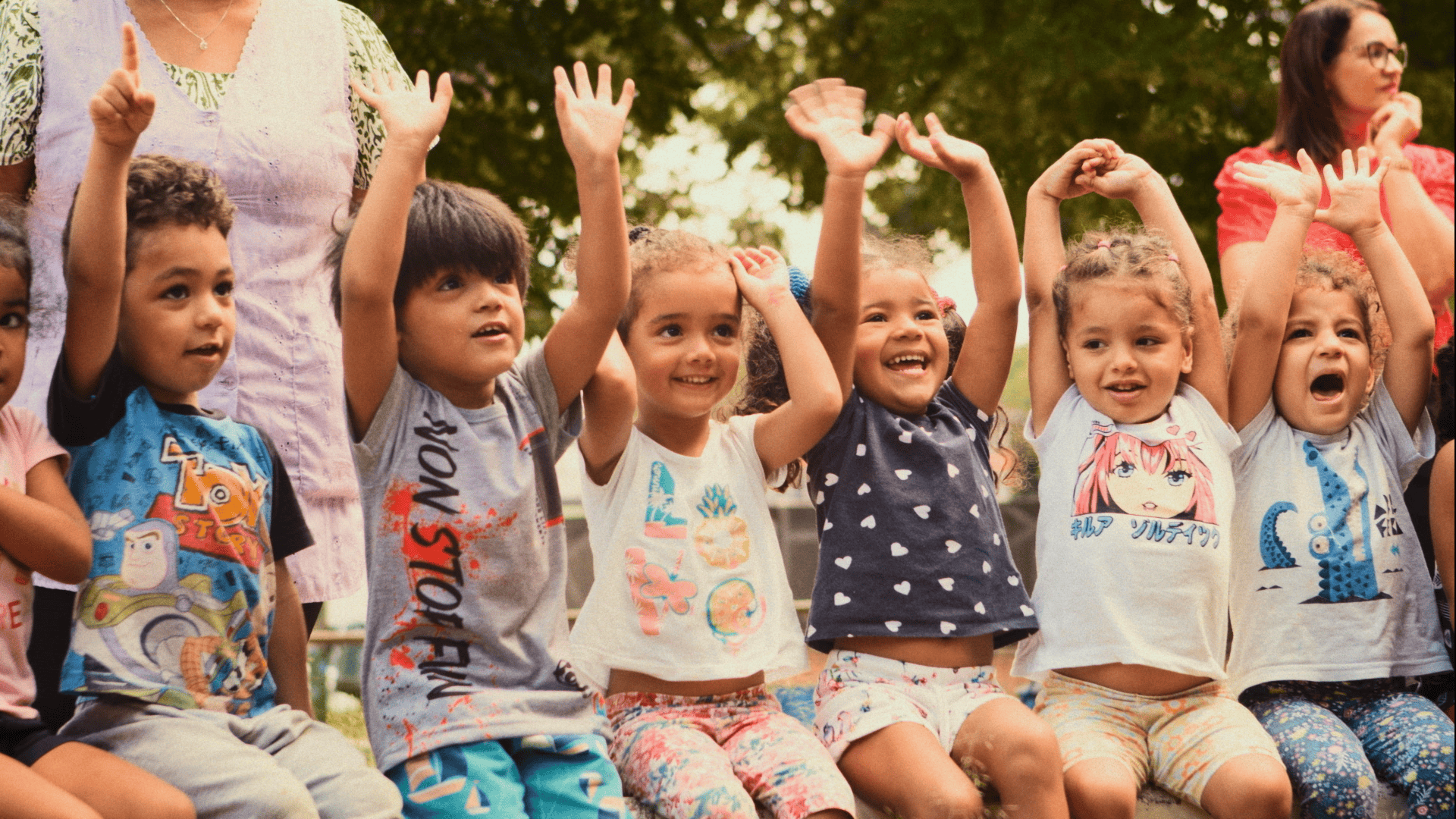
This provocation guides our work at UP Lab and was at the root of co-creating the movement Brincar é Direito (Play Is a Right), the result of network-based work with partners, community leaders, educators and residents. We started from a transformative premise: children are not just beneficiaries of public policy, but protagonists of the territories where they live.
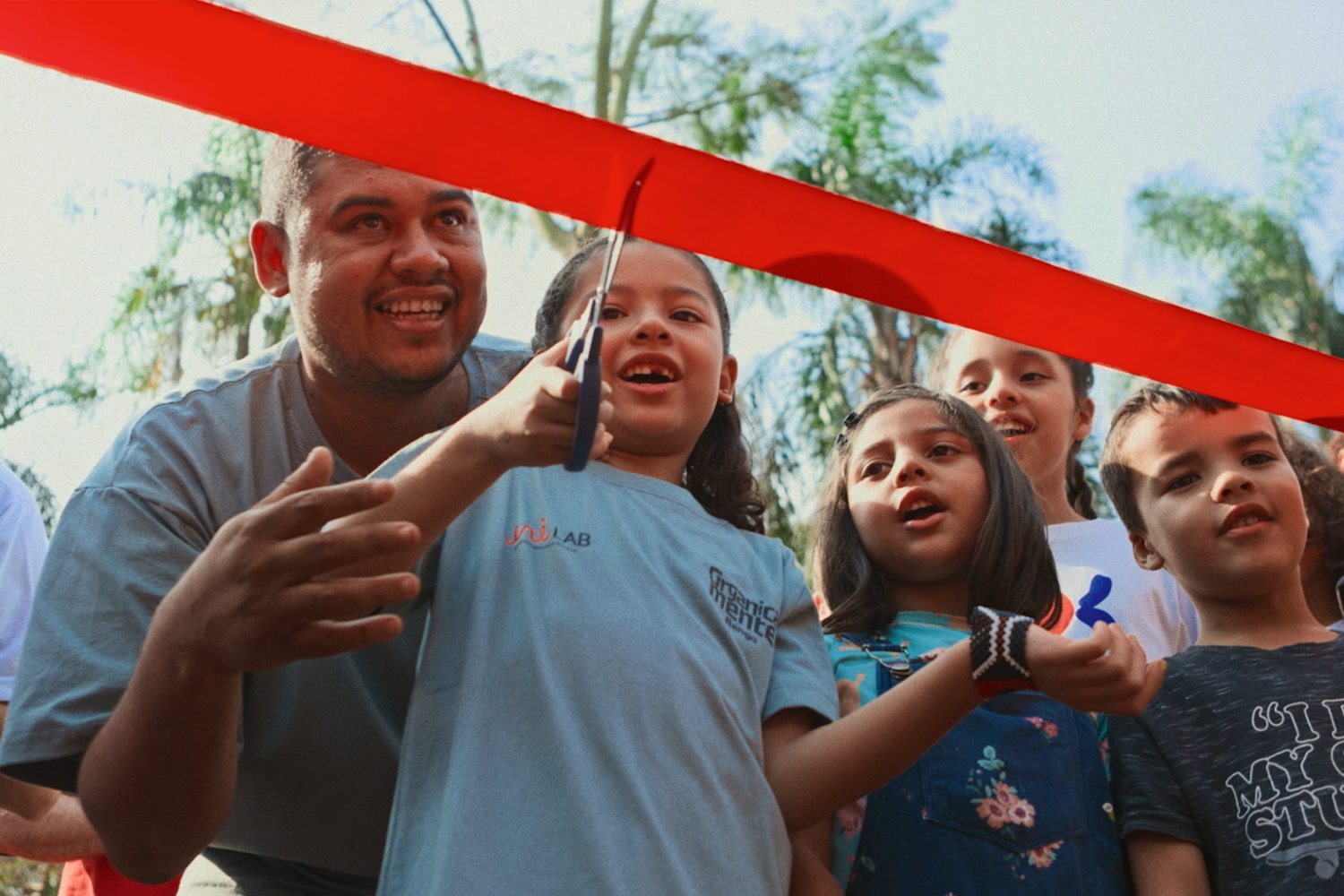
When a child plays, they reveal belonging, bonds and social safety. Inspired by Paulo Freire's pedagogy, we chose to listen before proposing and to build before delivering. The movement's methodology was born from an ongoing dialogue with those who live in and care for these spaces every day.
Brincar é Direito teaches us that transformation gains power when local knowledge is at the center of decisions. A community's most valuable resources lie in trust, collective memory and the capacity to cooperate — what Milton Santos describes as space as it is lived and experienced by those who inhabit it.
Play is a way of occupying the territory, strengthening community trust and passing on culture. When a child can play freely in public space, it signals a social environment able to welcome, protect and sustain life — one of the deepest indicators of territorial resilience.
In times of climate crisis and social exhaustion, the main innovation lies in recovering our capacity to cooperate. By strengthening public space and networks of care, we weave the foundations for more humane and autonomous local economies.
This connection between play and the local future is no accident. By strengthening public spaces, bonds of trust and networks of care, we are, in practice, weaving the foundation of living, resilient local economies. When a community sees itself as the producer of its own well-being, it naturally reverses the logic of external dependence: development stops being something that arrives from outside and becomes something that springs from exchange, care and valuing what is ours. Strengthening the territory is, therefore, strengthening the very engine that sustains more humane and autonomous economies.
The documentary Brincar é Direito, available on YouTube, Canal Futura and Globoplay, amplifies this message by proposing an essential reflection in Children's Month: what if the future is already being rehearsed, every day, in the squares, outskirts and territories that know how to care and imagine collectively?
With the strength and mobilization this inspiring project achieved, practical outcomes began to take shape beyond the screen. One example is the guide A New Look at Play, published by IPA Brasil with our support, which systematizes lessons learned, guides community practices and strengthens public policies for early childhood development in the territories.
FREIRE, Paulo. Pedagogia do Oprimido. Rio de Janeiro: Paz e Terra, 1987.
FREIRE, Paulo. Pedagogia da Autonomia: Saberes Necessários à Prática Educativa. São Paulo: Paz e Terra, 1996.
KRENAK, Ailton. Ideias para Adiar o Fim do Mundo. São Paulo: Companhia das Letras, 2019.
KRENAK, Ailton. Futuro Ancestral. São Paulo: Companhia das Letras, 2022.
SANTOS, Milton. Por uma Outra Globalização: Do Pensamento Único à Consciência Universal. Rio de Janeiro: Record, 2000.
